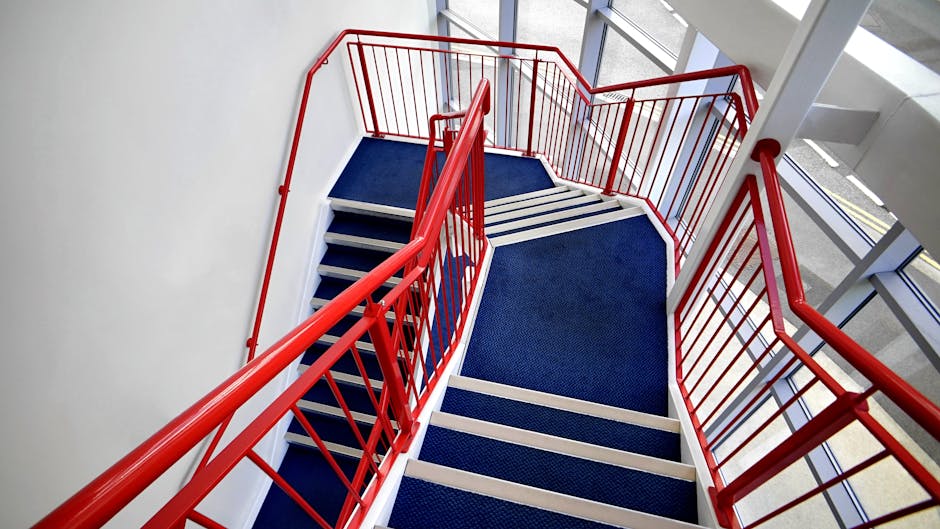
Access problems booking Harrow flat cleaning with narrow stairs
Booking a flat clean sounds simple enough until reality arrives: a tight communal entrance, a bendy staircase, low railings, a bulky machine, and nowhere sensible to park. If you're dealing with Access problems booking Harrow flat cleaning with narrow stairs, you're not alone. It's one of those jobs that looks straightforward on a booking form and then becomes a bit of a puzzle once somebody actually walks the route with a vacuum, an extraction machine, or a stack of cleaning kit.
This guide explains what the issue really is, why it matters, and how to make booking much smoother. You'll learn what to tell the cleaning company, what good access planning looks like, where the hidden risks are, and how to choose the right approach for a flat in Harrow with awkward stairs. To be fair, a few minutes of prep can save a lot of back-and-forth later.
If you want a general feel for the wider service range, you may also find the company's carpet cleaning, upholstery cleaning, and steam carpet cleaning pages useful as background while you plan your booking.
Table of Contents
- Why access problems with narrow stairs matter
- How access planning works for flat cleaning
- Key benefits and practical advantages
- Who this is for and when it makes sense
- Step-by-step guidance
- Expert tips for better results
- Common mistakes to avoid
- Tools, resources and recommendations
- Law, compliance, standards, or best practice
- Options, methods, or comparison table
- Case study or real-world example
- Practical checklist
- Conclusion
- Frequently asked questions
Why access problems booking Harrow flat cleaning with narrow stairs Matters
Access is not just a small booking detail. It changes how a cleaning team plans the job, what equipment they can safely bring, how long they may need on site, and whether a particular method is even suitable. Narrow stairs can make a simple flat clean feel like a moving-day operation, especially if the property is on an upper floor or shared with neighbours who need the stairwell clear.
In a Harrow flat, access issues often show up in predictable ways. The staircase may twist sharply. The landing may be tiny. The front door may open inward, leaving almost no room to manoeuvre. You might also have a long walk from the road, restricted parking, or a strict building management arrangement. None of that is unusual, but it does need to be known in advance.
Why does it matter so much? Because carpet and upholstery cleaning equipment is practical, but it is not magic. Some machines are compact; some are not. Some jobs can be handled with lightweight portable equipment, while others need a more detailed setup. If access is tight and nobody mentions it until the day of service, the result can be delay, extra handling, or in the worst case a failed appointment. Nobody likes that awkward conversation at the top of a staircase with a machine half-way up. Not fun.
Expert summary: The more detailed the access information, the better the booking. Measure the route, describe the stair shape, mention parking and entrance restrictions, and be honest about anything that might affect equipment movement.
Access also matters from a safety point of view. Tight stairways increase the chance of trips, knocks, and strain if heavy kit has to be carried awkwardly. That is why a professional team will usually want clarity before they confirm the visit. It helps protect the property, the cleaner, and the schedule. Simple, really.
How access problems booking Harrow flat cleaning with narrow stairs Works
Good flat-cleaning bookings usually follow a fairly practical process. First, you describe the home and the type of cleaning you need. Then the company checks whether the route into the flat is suitable for the equipment and number of operatives planned for the job. If access looks tight, they may ask for extra details or suggest a different method.
The key thing here is not just the number of stairs. It is the shape of the route. A short staircase with one awkward turn can be harder than a longer straight run. Spiral stairs are their own little universe. If there is no lift, no space on the landing, and a narrow door frame, the team has to work more carefully and often more slowly.
For example, a cleaner might be able to carry small items upstairs by hand while leaving the main machine at ground level, or they may use a compact system instead of a heavier extraction unit. In some properties, the best approach is to clean one room at a time so the equipment movement stays controlled. In others, the team may ask you to clear the route completely before arrival. It's all very ordinary in practice, but only if the information is exchanged early.
If you're unsure what to tell the company, imagine you are describing the route to a friend who has never been there. Mention the entrance, the stairs, any bends, the width of the tightest point, whether there is a banister, and where the parking or loading access is. A good booking team can work with that. A vague "it should be fine" usually causes trouble later.
Where water-based or hot-water methods are involved, access becomes even more important because carrying filled equipment upstairs is not ideal, especially in a narrow stairwell. That is one reason people often ask about methods such as steam carpet cleaning in flats with awkward access. It can be effective, but the practical setup has to suit the building.
Key Benefits and Practical Advantages
Getting access details right gives you more than convenience. It improves the whole service experience, and you can feel the difference on the day. The cleaner arrives with a realistic plan. The job starts on time. The route is less stressful. And the outcome is usually better because the team can use the right equipment instead of improvising at the door.
- Fewer delays: The team knows what to expect before they arrive.
- Safer handling: Narrow stairs are managed more carefully.
- Better equipment choice: Compact or portable systems can be planned in advance.
- Less disruption to neighbours: Shared stairwells stay clearer and calmer.
- More accurate quotes: The booking reflects the real job, not a guess.
- Lower stress for you: No last-minute surprises, which is always nice.
There is also a trust benefit. When a company asks sensible access questions, that is usually a good sign. It means they are thinking about safety, logistics, and service quality rather than just taking a booking blindly. In practical terms, that matters just as much as the cleaning itself.
Another advantage is better protection for the property. Narrow stairs can be easily scuffed if equipment is dragged or carried carelessly. A careful plan reduces that risk. That is especially relevant in older Harrow flats where stair surfaces, skirting, and door frames may already be a bit tired around the edges.
And yes, there is a time-saving benefit too. A team that knows the access challenges can set up faster, work more efficiently, and avoid the sort of shuffle that eats up the first twenty minutes of a visit. Nobody wants a cleaner doing an improvised dance on the staircase. Let's leave that to better occasions.
Who This Is For and When It Makes Sense
This matters for anyone in a flat, maisonette, converted house, or upper-floor apartment where the route in is tight or awkward. It is especially useful if your property has old staircases, shared access, or limited parking nearby. It also matters if you are booking a deeper clean rather than a quick refresh.
You will probably need to think about access planning if you are:
- in a top-floor flat with no lift
- living in a converted Victorian or Edwardian building
- dealing with steep or winding stairs
- booking carpet or upholstery work in several rooms
- trying to avoid disturbance to neighbours or a communal hallway
- asking for cleaning on a day when parking restrictions are tight
It also makes sense if your clean includes more than one item. A flat that needs carpet cleaning plus sofa cleaning plus stain removal can require more kit than a single-room job. Add a narrow staircase to that, and you really want the appointment planned properly. No shame in that at all.
Some customers only realise the access issue when they picture the equipment on the stairs. That moment of, "Hang on, where exactly is the machine going to go?" is often the point when good planning begins. Better late than never, but earlier is better.
If the building has shared areas, it can also be worth checking any rules about keeping corridors clear or using protective covers. A reputable company will usually appreciate being told about those details, especially where communal spaces are involved.
Step-by-Step Guidance
Here is a straightforward way to handle a booking when access is awkward. Keep it practical and honest. That's the whole trick, really.
- Describe the route from street to flat. Mention stairs, landings, bends, door widths, and whether there is a lift.
- State the floor level. Ground floor, first floor, second floor, attic conversion - all helpful.
- Explain the tightest point. If the stairs are narrow near the turn, say so. If there is a low ceiling, mention it.
- Tell them about parking and unloading. Is there a bay, permit parking, or a long walk from the vehicle?
- List the items to be cleaned. For example, carpet, rug, mattress, sofa, curtains, or upholstery.
- Ask what equipment they plan to bring. Compact kit may be more suitable in a tight flat.
- Check whether anything needs to be moved first. Small furniture, shoes, hallway clutter, and plant pots can matter more than people think.
- Confirm any building rules. Some properties require notice for contractors or have shared access expectations.
- Prepare photos if asked. A few clear pictures of the staircase and landing can help a lot.
- Reconfirm on the day. A quick reminder before arrival can prevent confusion.
A practical example: if you live in a flat above a shop in Harrow and the only access is a narrow staircase with one sharp turn midway, it is far better to say so up front than to discover it once the cleaner is carrying kit from the van. Even a very experienced team can only plan around the information they have.
For more complex soft-furnishing jobs, the company's sofa cleaning and mattress cleaning services may also be relevant when you're mapping out what can be done within the stairwell constraints.
Expert Tips for Better Results
After years of seeing access-heavy jobs go smoothly or go a bit sideways, a few habits stand out. They are simple, but they work.
- Send measurements where possible. Width at the narrowest point is more useful than a rough guess.
- Take a photo from the bottom and the top. Pictures often explain the situation better than a paragraph.
- Clear the route early. Shoes, pushchairs, boxes, and recycling bags all matter in a narrow stairwell.
- Book a sensible time window. Shared buildings can be busy in the morning and awkward at school-run times.
- Choose the right service mix. If access is tight, it can be smarter to prioritise the rooms that need attention most.
- Be realistic about what can be moved. Some furniture is not worth wrestling up or down stairs twice.
One small but useful tip: if the building entrance has a self-closing door, say that too. It sounds minor, but repeated door swings while carrying equipment can slow everything down. The same goes for intercoms, codes, and any oddly fiddly entry system. The cleaner will cope, of course, but knowing in advance keeps the job calmer.
Another useful habit is to think about the weather. Wet shoes on a narrow staircase are a nuisance, and in winter the first few steps can feel like a bottleneck. A dry route is simply easier. Not glamorous, but true.
And if you are comparing services, look beyond the headline price. A slightly cheaper quote may not be the better one if the team has not accounted for access time, parking, or carrying constraints. For a precise quote conversation, the company's pricing and quotes information is a sensible place to start.
Common Mistakes to Avoid
The most common mistake is under-explaining the access. People assume the stairs are "not too bad" and leave it there. Then the cleaner arrives to find a narrow, winding route with no landing space. It happens all the time.
- Hiding the awkward bits: If a stairwell is narrow, say so plainly.
- Forgetting the parking situation: A long carry from the vehicle can affect timing.
- Assuming all equipment is compact: Different jobs need different tools.
- Not clearing the entrance route: Even a couple of trainers in the wrong place can be annoying in a tight hall.
- Booking without checking building rules: Shared properties can have access conditions that catch people out.
- Leaving pet barriers or child gates in place: These can slow the setup if nobody has mentioned them.
Another mistake is treating access problems as if they are "the cleaner's issue". In reality, they are shared logistics. The more the customer explains, the more the business can do well. A bit of partnership goes a long way. It really does.
Also, don't overcomplicate the explanation. You do not need an essay. A few clear facts usually beat a dramatic description. Something like "first-floor flat, narrow staircase, one tight 180-degree turn, no lift, street parking only" is excellent. Short and useful.
Tools, Resources and Recommendations
You do not need specialist gear yourself, but a few practical tools can make the booking easier and the appointment smoother.
- Phone camera: Quick photos of the stairwell, door frame, and parking spot can be very helpful.
- Tape measure: Especially useful if the stairs or landing feel unusually tight.
- Simple note list: Write down floor level, access codes, parking details, and building instructions.
- Door wedges or route markers: Sometimes useful for your own organisation, though the cleaner will have their own workflow.
- Furniture sliders or moving felt pads: Helpful if you need to shift small pieces before the team arrives.
When deciding which service to book, think about the surface and the furniture together. A carpeted lounge with a narrow stairwell may need a different approach to a hallway-only job or a single rug refresh. The company's rug cleaning and stain removal pages are useful examples of services that can sometimes be booked as targeted jobs rather than full-property work.
If you are dealing with delicate fabrics, the access issue may be only one part of the decision. Curtains, trims, and soft furnishings can need a careful plan, which is where curtain cleaning and pet stain odour removal may come into the picture for more specialised needs.
And because trust matters, it is sensible to check operational details such as health and safety policy, insurance and safety, and terms and conditions before confirming any appointment. That is just good housekeeping, honestly.
Law, Compliance, Standards, or Best Practice
For a domestic flat clean, the main concern is not some complicated legal threshold; it is safe, reasonable working practice. In the UK, service providers are generally expected to work carefully, communicate clearly, and avoid putting people or property at unnecessary risk. That becomes especially important when stairs are narrow, access is shared, or equipment has to be carried through a common hallway.
Best practice usually means:
- asking for access details before confirming the job
- using suitable equipment for the building layout
- keeping routes as clear as possible
- not forcing oversized equipment into unsafe spaces
- being honest if the job needs rescheduling or a different setup
It is also sensible for both sides to understand privacy and property rules in communal buildings. If a cleaner is passing through shared areas, the arrangement should stay respectful and tidy. A company's published accessibility statement and about us information can help show how they think about customer experience, while recycling and sustainability may be useful if you care about how waste and residues are handled after the job.
For payment-related confidence, especially when you are booking remotely, it is also worth checking payment and security. That does not solve the stair problem, obviously, but it does support a more reliable overall booking process.
One important note: if a cleaner raises safety concerns about your access route, that is not necessarily a refusal of service. It may simply mean the method, timing, or equipment needs to change. That is sensible best practice, not awkwardness. Truth be told, it usually saves everyone trouble later.
Options, Methods, or Comparison Table
When access is tight, the practical question is not "What is the best cleaning method in the abstract?" It is "What will actually fit, work safely, and still deliver a proper clean?" Here is a simple comparison that helps with decision-making.
| Option | Best for | Access impact | Things to watch |
|---|---|---|---|
| Compact portable cleaning | Small flats, narrow stairs, limited manoeuvring space | Lower | May require more setup time if there are several rooms |
| Standard extraction equipment | Larger rooms or broader access routes | Medium to higher | Can be harder to carry through tight staircases |
| Targeted room-by-room clean | Specific rooms or problem spots | Lower | May not suit every whole-flat refresh |
| Upholstery or rug-only booking | Isolated items needing attention | Usually lower | Still needs clear access and safe handling |
A lot depends on the actual layout. A portable setup might be ideal for a second-floor flat with a cramped stairwell, while a larger machine may still be appropriate if there is a lift or unusually generous landing space. The point is to match the method to the building rather than the other way round.
Sometimes the smartest choice is a combination. For example, a customer might book targeted carpet cleaning for the lounge, a small upholstery cleaning job for the sofa, and a separate stain treatment for one heavily used room. That can be more realistic than forcing one oversized visit to do everything in a cramped building.
Case Study or Real-World Example
Here is a realistic scenario. A tenant in a Harrow converted house wants the hallway and lounge refreshed before a move-out inspection. The flat is on the first floor. The staircase is narrow, with one sharp turn and a small landing where only one person can stand comfortably. Parking outside is limited, and there is no lift. Standard, careless booking would probably have ended in delay.
Instead, the customer sends a few photos, explains that the stairwell is tight, and confirms the floor level. The cleaner can then plan a compact setup, bring only the equipment needed, and allow extra time for stair handling. The route is cleared the night before, shoes are moved, and the entrance is left open for arrival. Nothing dramatic. Just sensible planning.
The result is a calmer appointment. The cleaner can get on with the job without squeezing bulky kit around the bannister, and the customer is not standing there thinking, "This looked easier on my phone." That kind of honesty saves everyone a bit of stress.
In a similar situation, someone might decide not to book a full-property service at all. Maybe the access route is just too tight for a large clean, but a smaller focus on the worst areas makes better sense. That is not a compromise in a bad way. It is a practical decision, and often the right one.
Practical Checklist
Use this before you confirm the booking. It is short on purpose.
- Have I described the staircase clearly?
- Do I know the floor level and whether there is a lift?
- Have I mentioned the narrowest point or tightest turn?
- Have I checked parking and unloading access?
- Have I listed every item or room that needs cleaning?
- Have I cleared the route from the entrance to the flat?
- Have I told the company about any building rules or access codes?
- Do I know whether a compact or alternative method may be better?
- Have I checked the company's policies on safety, payment, and terms?
- Am I ready to send photos if asked?
If you can tick most of those off, you are in a very good place. And if you can't, that's fine too. Just gather the missing details before you book. It's one of those jobs where five minutes of prep can save thirty minutes of hassle. Maybe more.
Get a free quote today and see how much you can save.
Conclusion
Access problems booking Harrow flat cleaning with narrow stairs are common, manageable, and usually much easier to solve than people expect. The trick is to treat access as part of the service, not as an afterthought. If you describe the route clearly, share the awkward bits, and choose a method that fits the building, the whole booking becomes smoother and safer.
For flats in Harrow, where older conversions, shared entrances, and tight staircases are part of everyday life, that practical approach matters. It protects the property, helps the cleaners work properly, and gives you a better result without unnecessary drama. A bit of clarity goes a long way.
And that's often the real difference between a stressful appointment and an easy one: everyone knows what they are walking into, quite literally. That calm, unhurried start makes the whole day better.
Frequently Asked Questions
Can I book flat cleaning if my Harrow property has very narrow stairs?
Yes, in many cases you can. The key is to explain the stair width, turns, and floor level before the appointment is confirmed. If the access is very tight, the company may suggest a different setup or a more suitable method.
What access details should I give when booking?
Give the floor number, stair shape, narrowest point, parking situation, building entry method, and any shared hallway rules. Photos are often helpful too. A short, clear description is usually enough.
Will narrow stairs affect the quote?
They can. Not always, but access challenges may affect time, equipment choice, and handling. It is better to mention them early so the quote reflects the real job rather than a guessed version of it.
What if the cleaner arrives and the equipment will not fit?
That is exactly why access details matter. If a job is badly misdescribed, the cleaner may need to reschedule or adjust the service. Honest communication before the visit avoids that awkward moment on the staircase.
Is a portable machine better for narrow stairs?
Often, yes. Compact equipment is usually easier to carry and manoeuvre in tight flats. That said, the best choice depends on the rooms, the flooring, and how deep a clean is needed.
Should I move furniture before the appointment?
Small items, shoes, boxes, and anything blocking the route should definitely be moved. Larger furniture should only be moved if it is safe and practical to do so. If in doubt, ask the company in advance.
Do I need to tell the cleaner about parking restrictions?
Absolutely. Parking and unloading access can affect arrival time and how smoothly the job starts. Even a short walk from the van can matter when equipment has to be carried upstairs.
Can shared stairwells cause delays?
Yes, they can. Shared stairs may need more careful movement, especially if neighbours are coming and going. That does not make the job impossible, just a bit more planned.
What if my flat is in an old conversion with awkward corners?
That is very common. Old conversions often have sharp turns, small landings, and uneven access. Send photos if you can, and be specific about the tightest points. It helps the team prepare properly.
How do I know whether I need a full clean or just targeted work?
If access is difficult, targeted cleaning can sometimes make more sense than a whole-property visit. For example, one rug, one sofa, or one badly stained room may be the smartest place to start. A good quote conversation will help you judge that.
Are narrow stairs a health and safety issue?
They can be. Tight staircases increase the chance of slips, bumps, and awkward lifting. That is why safety-conscious companies ask for access details and may adjust the plan if needed.
What is the best way to prepare a flat for a cleaner?
Clear the entrance route, remove loose items from the stairs, confirm access codes, and send photos if requested. A tidy, open route makes the visit much easier and usually speeds everything up.
Where can I check the company's policies before booking?
It is sensible to review the company's terms and conditions, health and safety policy, insurance and safety information, and pricing and quotes details before you confirm. That way, you know what to expect and who is responsible for what.